As a moviegoing fanatic, obviously I’ll advocate for Netflix theatrical runs any day of the week.
I’m no Netflix hater. It’s a valuable company that has a gargantuan output of movies, TV shows, and even games. It’s a phenomenal success that’s been a part of my life since the days before streaming, when it was a nice compliment to Redbox.
But it’s absolutely INFURIATING that the company refuses to release movies in theaters. CEO Ted Sarandos has spent most of the last decade trashing movie theaters, even as recently as a year ago. But then came the Warner Bros. chaos, and the idea of Netflix theatrical runs suddenly became a real, genuine thing.
Nobody in the Hollywood media believed them when they pivoted to supporting theaters, when Sarandos promised 45-day theatrical windows before movies went to home video. They were right not to trust it. But I saw the glimmer of unspoken truth behind the press releases and interview drops:
Netflix tasted the nectar of movie theaters, and slowly they’re being transformed.
Yeah, they lost Warner Bros., and that’s really bad for the future of the movies. But if Netflix management is at all competent, then Netflix theatrical runs can save the whole industry.
Why Netflix Theatrical Runs Now?
They’ve always done event film releases. The Irishman, Glass Onion, every awards contender. They’re small runs that don’t even get officially reported on. But then K-Pop Demon Hunters had its huge #1 theatrical debut, over a month after its Netflix release. Then events like the Stranger Things finale completely blew out participating theaters. And rival streamers like Peacock with Five Nights at Freddy’s, Apple TV+ with F1, and Hulu with Predator Badlands sent their streaming movies to theaters and made a crapton of money.
There’s no evidence that movies do worse on streaming if they came to theaters first. No evidence for increased subscriber churn I’ve ever seen.
In reverse, we see time after time where notorious box office flops come to Netflix and conquer the streaming charts. Their theatrical runs saw no success, but the high-profile marketing and word-of-mouth ended up turning them into modest or major hits.
Movies in theaters just Do Better. There’s a reason that new GOAT movie from Sony is making a bunch of money, but Sony’s far superior Mitchells vs. the Machines has faded into a footnote. The latter was released directly to Netflix mid-pandemic. It was pretty popular for a while, but now it’s just a library title deep in the back catalogue.
The Moviegoing Fan Frenzy
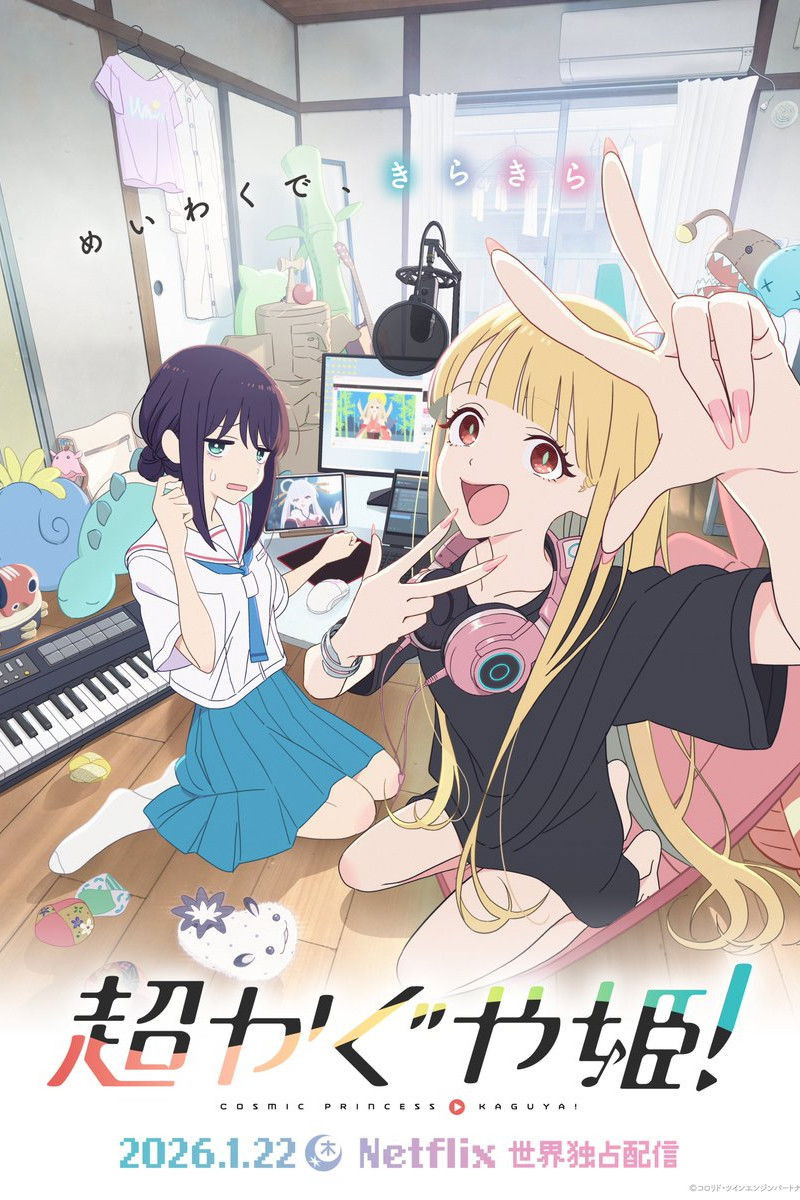
Recently, almost exclusively in Japan, the movie Cosmic Princess Kaguya, released on Netflix in January, has been given a limited theatrical run. Not a one-off event like K-Pop Demon Hunters, but actually in theaters for a few weeks, with many showtimes a day but upcharged “event price” tickets.
I checked it out in theaters mostly because I looked at the tickets and it was completely sold out for the first 4 days of release. A movie on Netflix with this kind of box office?? So, it turns out that the movie is absolutely amazing, one of my extremely few 5-star films.
I extremely, extremely, extremely recommend Cosmic Princess Kaguya. Moreso if you get a chance to see it in theaters. Though… It IS available anytime on Netflix if you want.
But it’s not the kind of movie you just watch once or twice and nod your head in enjoyment. This is the kind of movie where you get together with fans to celebrate. The kind of movie that gets cosplayers at conventions and fan doujin comics.
You don’t want to watch this alone in bed on your smartphone. You want to watch this packed in an auditorium with a hundred other fans with the highest screen and audio quality available.
And so, even in a very limited run, it’s made a huge sum of money, and it’s expanding nationwide next week. The first breakout success of 2026 in Japan.
Now imagine if Netflix had released this in theaters across the whole world, with all their marketing might. It’d probably have had a modest start, but it’d have gained legs and spread all over otaku circles in North America, Europe, East Asia, and beyond. It’d probably be even MORE popular.
You Gotta Do It
A lot of people can argue that Netflix theatrical runs are a mirage, that movies like Cosmic Princess Kaguya are only able to break out BECAUSE they are readily available on Netflix.
Nah. Don’t buy that argument. It’s what some lazy executives will tell you in order to keep the status quo.
For Japanese anime movies, you only need to look back at Look Back, released by Netflix’s biggest competitor Amazon-MGM in 2024.
It got a limited theatrical release in a few theaters ahead of its streaming debut. It’s an arthousey, emotionally heavy, 65-minute film that’s mostly riding off the reputation of the creator of Chainsaw Man, so I think they were expecting something pretty modest.
Instead, the film grew bigger and bigger. My first watch, the screening was half empty in one of the theater’s smaller auditoriums. Pretty normal for a Wednesday night showing. My second watch a week later? In a much bigger auditorium, nearly sold out.
Just like Cosmic Princess Kaguya, I absolutely loved Look Back, enough that it’s in my top ten favorite films ever. I even wrote about it for this blog a while back. Even though it’s not quite so otaku-friendly, not very merchandisable, it still has that same juice. The electric energy that makes it a must-watch on the big screen, with a big crowd.
Wisely, Amazon-MGM realized the limited run wasn’t enough, realized the movie had real magic. So they delayed the streaming release by months and gave the film a full nationwide release. It grossed over 2 billion yen in Japan alone, then went on to success in many other countries.
Amazon-MGM’s been pretty decent about releasing its movies in theaters. The mostly terrible Red One made $100 million in North America alone, then debuted on Amazon Prime in time for Christmas and basically everyone watched it. I don’t know why we watched it, but we did. It helped movie theaters thrive, helped market this overly expensive bad movie, and encouraged MGM to make more blockbuster-level films starting in 2026.
Surely now, Netflix is looking at Cosmic Princess Kaguya and realizing what they missed by releasing it on Netflix first.
Just the box office money alone would have made up for the hurdles of film distribution and extra marketing budget. It’d have grown the film even further and potentially turned it into a global hit like K-Pop Demon Hunter (but, uh, much smaller).
Paramount-WB Will Kill Theaters. Netflix Theatrical Runs Will Save Them.
As you may have heard, Netflix won’t be buying Warner Bros., so all its promises of 45-day theatrical windows and dozens of movies a year won’t come to fruition.
But after months of talk and negotiation, after multiple huge successes in theaters… That nectar is looking oh so sweet.
Paramount and WB merging will cost tens of thousands of jobs, and reduce two studios who release 20-25 films a year down to one studio that releases 15-20 films a year. It’s the worst of the worst in media consolidation.
Movie theaters are ALREADY in a precarious position in the post-pandemic porld. When Disney bought 20th Century Fox, that turned a studio releasing 20 films a year to a studio that releases 5. Disney itself was already ramping down releases of smaller movies, while Sony and Paramount have struggled for a decade.
Reducing that even further will inevitably result in hundreds of theaters around the world closing, and thousands more job losses in the film industry. And that might create a death spiral where all but the biggest IP-driven event films are unsustainable to produce, then costing thousands more jobs as the people who make the films can’t find work.
Netflix knows the risks of big budget films better than anyone. When they don’t hit, they Do Not Hit. Losing theaters is lose-lose situation.
And releasing Netflix movies in theaters is a win-win situation.
When a niche anime film can make tens of millions of dollars even after it’s available on streaming, it’s clear that they’ve been leaving money on the table for way too long.
Creators are happy. Moviegoers are happy. Theaters are happy. Netflix’s original movies lose that “shoddy slop” reputation, and once they go on streaming they’ll be even more high-profile.
And so I hope–expect, honestly–that Netflix will actually pivot away permanently from its anti-theater stance.
We just have to make sure to vote with our wallets whenever they do.

Well, I mean, this aged perfectly.
I knew they’d start doing theatrical runs! IMAX for the Once Upon a Time in Hollywood spinoff in November, and then a full run for Narnia in February.
And since this post, Cosmic Princess Kaguya is still playing in its 15th weekend in theaters, with 2.5 billion yen and the top original anime movie not by Ghibli, Shinkai, or Hosoda. It’s gotten bigger and bigger, to the point that Netflix has been seen as its main hurdle to breaking out further.
Actually, the part of this post that’s aged a little poorly is the implication that the movies need saving. 2026 has been a gangbuster year especially in North America. Netflix can help the theaters grow even bigger in 2027 and beyond, though.